Write my movie
Your true story. Your screenplay.
Seven missions take you from one true story to real script pages. Make a movie, a TV show or a documentary. You write every word, and only you can read it.
Every screenplay opens with two words
Fade in.
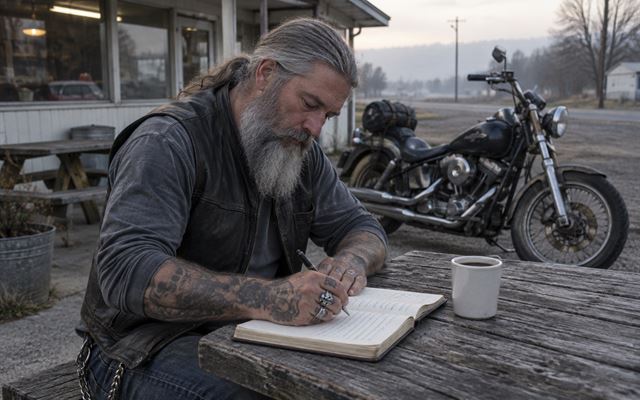
After that, every word is yours. The people you knew. The places you were. What happened, the way you remember it.
The seven missions
Seven missions. One real script.
Each mission is one part of the work. Go in order, or jump around. Nothing is locked, and it saves as you go.
- Mission 1
The story
Answer eight questions, and get your logline: one sentence that sells the whole movie.
8 questionsYour logline - Mission 2
The people
Make a card for each person in your movie, with what they want and how they talk.
One card eachReal or renamed - Mission 3
The shape
Lay out your movie on scene cards, act by act, until the order feels right.
Act 1Act 2Act 3 - Mission 4
Write it
Write one scene at a time in real script format, by typing or by talking it through.
Scene headingActionDialogue - Mission 5
Read it
See your pages, and hear a scene read out loud with one voice for each person.
Script viewEasy readTable read - Mission 6
Make it better
Make five short rewrite passes, one at a time.
WantChangeTalkCutFriend - Mission 7
Get it out
Download your script in the format the film business uses, and see what comes next.
PDFFinal DraftFountain
Where to start
Start from what you have.
Your film pitch
Already pitched it? Your answers carry over: your title, your logline and your first scene cards.
A story you already wrote
Pick a chapter or a story. It opens beside you while you work.
A blank page
Start with the eight questions about your story.
Movie, TV or documentary
Pick what you are making.
For films and TV, one script page is about one minute on screen. Pick the one that fits your story.
Feature film90 to 110pages
About an hour and a half on screen
The length of most movies in theaters.
Short film10 to 15pages
About 10 to 15 minutes on screen
A strong first script. Film festivals show short films.
TV show, half hourAbout 30pages
Per episode
TV show, one hourAbout 55pages
Per episode
DocumentaryWhat we see and hear
A script for what we see and hear, with interviews, narration, photos and footage.
Making a TV show?
Plan your season. Then write the next episode, with the same characters carried over.
Not sure?
Start short. A finished short beats an unfinished feature, and you can grow it later.
What you get
Real script pages. Three ways to take them.
The app lays out your pages in standard screenplay format. Download them as any of these files. Tap one to see the same scene inside it.
Each file comes with a title page: your title, your name or a pen name, and "Based on a true story" if you want it.
Example. A made-up movie: Ten Days to Abilene
Example38.
INT. MAC'S TRUCK - OUTSIDE A DINER, ERIE - NIGHT
Rain pours. JOE digs in the glove box for the registration. He finds an envelope. Mac's handwriting: OPEN ON YOUR ONE YEAR.
Biscuit rests her head on the seat. Watches him.
Joe
Don't look at me like that.
He sets the envelope on the dash. He does not open it.
Cut to:
<Paragraph Type="Scene Heading">
  <Text>INT. MAC'S TRUCK - OUTSIDE A DINER, ERIE - NIGHT</Text>
</Paragraph>
<Paragraph Type="Action">
  <Text>Rain pours. JOE digs in the glove box for the registration. He finds an envelope. Mac's handwriting: OPEN ON YOUR ONE YEAR.</Text>
</Paragraph>
<Paragraph Type="Character">
  <Text>JOE</Text>
</Paragraph>
<Paragraph Type="Dialogue">
  <Text>Don't look at me like that.</Text>
</Paragraph>
INT. MAC'S TRUCK - OUTSIDE A DINER, ERIE - NIGHT

Rain pours. JOE digs in the glove box for the registration. He finds an envelope. Mac's handwriting: OPEN ON YOUR ONE YEAR.

Biscuit rests her head on the seat. Watches him.

JOE
Don't look at me like that.

He sets the envelope on the dash. He does not open it.

CUT TO:
Your words
Every word is yours. Help waits until you ask.
You write every scene, by typing or by talking it through. Help me write is optional. It stays off until you turn it on.
- It only shapes your own telling of a scene into a first draft.
- The draft is clearly marked. Use it, change it or throw it out.
- It never adds things that did not happen. Your telling is always kept.
- Rather not use it? Lay it out for me turns each sentence you said into a line you sort yourself. No AI.
When Help me write is on, only the scene you told, its place and the names in your movie are sent, and only when you tap.
Your telling of scene 15
We stopped outside a diner in Erie because it was pouring. I went in the glove box looking for the registration. There was an envelope. Mac's handwriting, open on your one year. Biscuit put her head on the seat and just looked at me. I said don't look at me like that. I put it on the dash. I didn't open it.
Help me write is off.Your telling stays just as you said it. Tap the switch to see what it does when you turn it on.
First draft from Help me write. Your words, shaped.
INT. MAC'S TRUCK - OUTSIDE A DINER, ERIE - NIGHT
Rain pours. JOE digs in the glove box for the registration. He finds an envelope. Mac's handwriting: OPEN ON YOUR ONE YEAR.
Biscuit rests her head on the seat. Watches him.
JOE
Don't look at me like that.
He sets the envelope on the dash. He does not open it.
Nothing new happened in the draft. Every event came from the telling above, and the telling is kept.
A made-up example. Nothing on this page is sent anywhere.
True stories need care
Real people. Real places. Real care.
A true story has real people in it. The app helps you look after them, and yourself.
- Change names, or ask first. Most true-story movies change names. If you keep a real name, ask the person or their family first.
- Protect people's privacy. Use first names or initials for anyone from meetings, treatment or groups. Think about court, work, custody and family before you share.
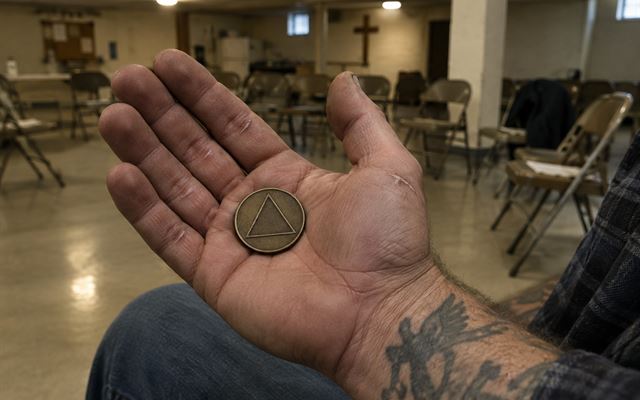
- Relapse belongs in the story. Most people in recovery have relapsed, and some relapses led to the way back. Tell it with respect and without shame. A new start never erases what came before.
- Hard scenes can wait. Write the moment just before and the moment just after. Come back to the middle another day.
- Reminders, not rules. A short checklist sits right above the download buttons.
After the last page
Finished a script? Keep going.
A finished script is a big deal. Here is one place writers take it next, and two things you can do in the app.
A next step outside the app
Local writing groups and libraries
Many public libraries and community centers host free writing groups. Ask at your local library to find one near you.
A group is a good place to hear your pages read out loud and get honest notes.
Libraries and community groups run these, not One Day, One Page.
Find a library →In the appMake a pitch from your script
Opens Pitch a film, filled in from your logline, your people and your big moments.
In the appGet notes from someone you trust
Send one scene as a PDF to someone you trust, and ask what they felt. Once it leaves your phone, that copy is not locked.
Private
Your script. Locked to you.
Your movie is locked like everything else you write in the app. Nobody can read it, not even us.
- It is locked on your device before it is saved
- You decide if, when and with whom to share it
- Nothing leaves the app unless you download it or share it
Questions
Before you yell action.
Do I need to know how to write a screenplay?
No. The seven missions walk you through it, one step at a time. The app handles the page layout, so your script looks the way a script should.
How is this different from Pitch a film?
Pitch a film is twelve questions that become a short pitch. Write my movie goes all the way to a full script. If you already pitched your story, your title, logline and first scene cards carry over. See Pitch a film.
Can I write a TV show or a documentary?
Yes. Pick a feature film, a short film, a half-hour or one-hour TV show, or a documentary. For TV, you plan your season, then write the next episode with the same characters carried over. A documentary script is for what we see and hear: interviews, narration, photos and footage.
Will AI write my movie?
No. You write it. Help me write is optional and stays off until you turn it on. It can only shape your own telling of a scene into a first draft, clearly marked. It never adds things that did not happen.
Can I open my script in Final Draft or another script app?
Yes. Download a Final Draft file (.fdx), or a Fountain file, a plain-text script file many writing apps can open. You can also download a PDF in standard script format.
Can we write a movie together?
Yes. Start a Circle and write it with people from your journey: family, a sponsor, friends from treatment. Each person's writing stays locked, and nothing is shared until you choose to.
Do I have to finish it in one sitting?
No. It saves as you go. Go in order, or jump around. Come back whenever you are ready.
What if a scene is too hard to write?
Skip it for now. Write the moment just before and the moment just after, and come back another day. If it gets to be too much, help is free and open any time: call or text 988. For an overdose or emergency, call 911. Support and safety.
Will you send my script to anyone?
No. Your script is locked so only you can read it. Nobody can read it, not even us. You decide if and how to share it. Read Before you share first.
Does it cost anything?
No. One Day, One Page is free for people in recovery and the people who love them. A nonprofit keeps it that way.
 Free for people in recovery
Some stories need the whole movie.
A movie, a TV show or a documentary, one scene at a time. Your words, in real script format. Free, and only you can read it.