Need help now? Call or text 988. SAMHSA Helpline 1-800-662-4357. Overdose or emergency: 911.
ODOPOne Day, One Page
What you can writeWrite my bookMy road to recoveryTell one storyJust talkWrite a letterSit down with someoneAnswer five questionsWrite a songJokes and sayingsPitch a filmWrite my movieMy 12 StepsKeepsake boxMy peopleChips and tokensSee an example About us
Who we areWhat we doMission, vision and purposeOur cultureDogStar Recovery ResidencesFor family and friendsSupport our work
More
The LibraryHow it worksDashboardFor familiesPrivacyAboutHelpContact

Start writing freeLog in

For family and friends

Someone you love is in recovery. Sit down with them.

You do not have to fix anything or know the right words. You can ask a question, hold the phone, and listen. They write their story. You help them get started.

FreeFor both of you
12 family questionsGentle ones first
Their wordsNothing added
PrivateLocked to the writer
For the people who love someone in recovery

You may have waited years to hear the story.

Maybe you only saw the hard parts. Maybe you never knew what it was like from the inside. Asking one gentle question, and really listening, can mean a lot to both of you.

Family questions

Questions you can ask together.

Pick a topic and Sam offers a few questions, one at a time. You read them out loud. They answer by talking or typing. Anyone can skip any question.

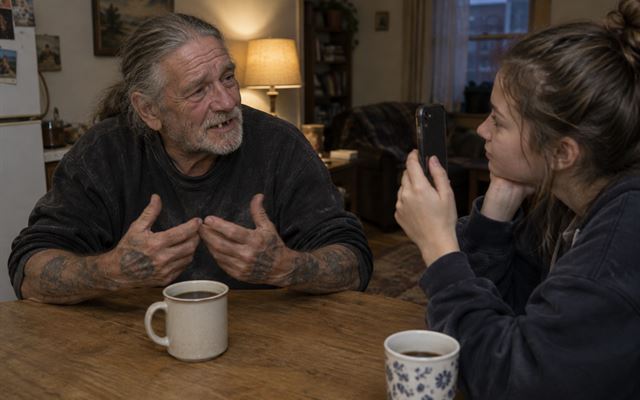
Two people at a kitchen table with mugs of coffee, one holding a phone while the other talks Topic · Growing up

Before any of it

  • Question 1 of 10What do you remember about the house you grew up in?
  • Question 4What did you love to do as a kid?
  • Question 8What do you wish we had talked about back then?
Growing upThe house, the street, the people around the table.
Good memoriesA trip, a holiday, a song you both still know.
What you were proud ofSomething they did that you never forgot.
The people who helpedWho showed up, and what they did.
The turning pointOnly if they want to. What changed.
Early daysWhat the first weeks were like, from their side.
Small winsA good morning, a kept promise, a laugh.
Work and homeBuilding something, one day at a time.
Family while healingA birthday, a holiday, a phone call that mattered.
What they want you to knowThe thing they never found the words for.
What you want them to knowYour side, if they ask for it.
Another topicAnything that matters to you both. You name it.
A person on a couch at night, smiling at a video call with family on a laptop
A phone call can be a chapter too
How to help someone write

You hold the phone. They tell the story.

Eleven small things that make it easier. None of them need any experience. It saves after every answer, so you can stop whenever you need to.
  1. Ask first"Would you want to tell me some of your story?" No is a fine answer.
  2. Pick a quiet timeA kitchen table, a porch, a drive. Not in the middle of a hard day.
  3. Start with the easy onesGrowing up, good memories, the people who helped.
  4. Read slowlyIn your own voice. Read it again if they need it.
  5. Tap TalkTheir words appear as they speak. Fix a word later.
  6. Let the quiet workSilence is okay. Do not finish their sentences.
  7. Let them skip"I do not remember" and "Not today" are real answers.
  8. Listen, do not fixNo advice, no correcting the story. Just thank them.
  9. Keep it about themYour side can wait. There is a place for it later, if they ask.
  10. Stop when they are tiredOne question today is a good day.
  11. Let them keep itIt is their story. They decide who reads it.
An open notebook with handwriting on a wooden table, beside a mug of tea and a folded letter
A note from you
Check in with someone

Add your side. Only if they ask.

Writers can invite people from any part of the journey: family, sponsors, mentors, friends from treatment or a recovery home. If you are invited, you write your side of a memory in your own free, private account. You choose whether to send it. They choose whether it goes in their book.

Invites are discreet. They never say recovery or what the app is for unless the writer chooses to. By default the invite reads: "[Name] would like your help remembering something for a story they are writing."

A made-up example · March

I remember the morning you called and said you were ready. I sat in the car for a long time after. I was so proud of you.

Private by design

Their story stays theirs.

The writing is locked on the device before it is saved. Nobody can read it, not even us. Only the writer decides who sees it.

A few things to keep in mind
  • Use the writer's own account if you can, so the words stay with them.
  • Use first names or initials for anyone from meetings, treatment or groups.
  • Think about court, work, custody and family before anything is shared in public.
  • Never share their writing without asking. It is theirs.
  • Never post a photo of the screen. Use a private link or a PDF they choose to send.
  • Keep personal details out: addresses, ID numbers, phone numbers.
  • Every share, link or download asks the writer to check it first.
  • A privacy check runs before anything goes public.
  • Quiet mode keeps names and places off anything they share.
  • Help me write is off until they turn it on, and it says so before it sends a word.
A good first question

Start small. Start kind.

You do not need a plan. One of these is plenty for a first sit down.
  • What is a good memory you have of us?
  • Who helped you most, and how?
  • What do you want me to understand?
Every path is welcome

Their recovery. Their way.

Neighbors working together along a small-town street at sunsetAny path

12-step, SMART Recovery, faith, medication or their own way.

Medication for addiction treatment, harm reduction, a treatment program, a church, or a path all their own. Every path counts here, and the questions never pick a side.
A person standing alone at dawn on a high desert road, looking out at the lightAny stage

Early days or many years.

Most people in recovery have relapsed, many more than once, and for some a relapse led to the turning point. Those stories are honored here, with respect and without shame. Every recovery year is celebrated, and a new date never erases the years before it.

Your own story

You lived it too. You can write it.

Families and friends carry their own story. You can start your own free, private account and pick "Family or friend" when you set up. The questions are written for you.
  • Write about the person you love, and about yourself.
  • Keep it private, or share it only if they say yes.
  • This is a writing tool. It is not treatment, therapy or a program, and it does not replace support for you or for them.
A grown son kneels to hug his mother on a front porch while family looks on
Coming home is a chapter too
If it gets heavy

You do not carry it alone.

988 Suicide and Crisis LifelineCall or text 988Free and confidential, any time, for them or for you. Or text 988.
SAMHSA National Helpline1-800-662-4357Free, confidential, 24/7. Treatment referral and information, for families too.
Overdose or emergencyCall 911If someone may have overdosed or is in danger, call right away.
Your own supportA friend you trust, a family group, a faith leader or a counselor. You need people too.
Questions

Before you start.

Can I read what they write?
Only if they choose to share it. Their writing is locked on their device before it is saved. Nobody can read it, not even us.
Whose account should we use?
Theirs, if possible, so the words stay with them. You can sit beside them and hold the phone. If you use your own account, share the answers with them by private link or PDF.
What if a question brings up something hard?
Stop and sit with them. Skip the question. Help is free and open any time: call or text 988, or call the SAMHSA National Helpline at 1-800-662-4357. In an emergency, call 911.
What if they are not ready?
That is okay. Let them know the door is open. You can start your own story in the meantime.
Is this treatment or therapy?
No. It is a writing guide. It asks questions and keeps the answers. It is not treatment, therapy or a program, and it does not give medical advice.
Does it cost anything?
No. It is free for people in recovery and the people who love them, and it stays that way.
Free for people in recovery

Ask one question today.

Sit down together. A few minutes. Locked to the writer.